

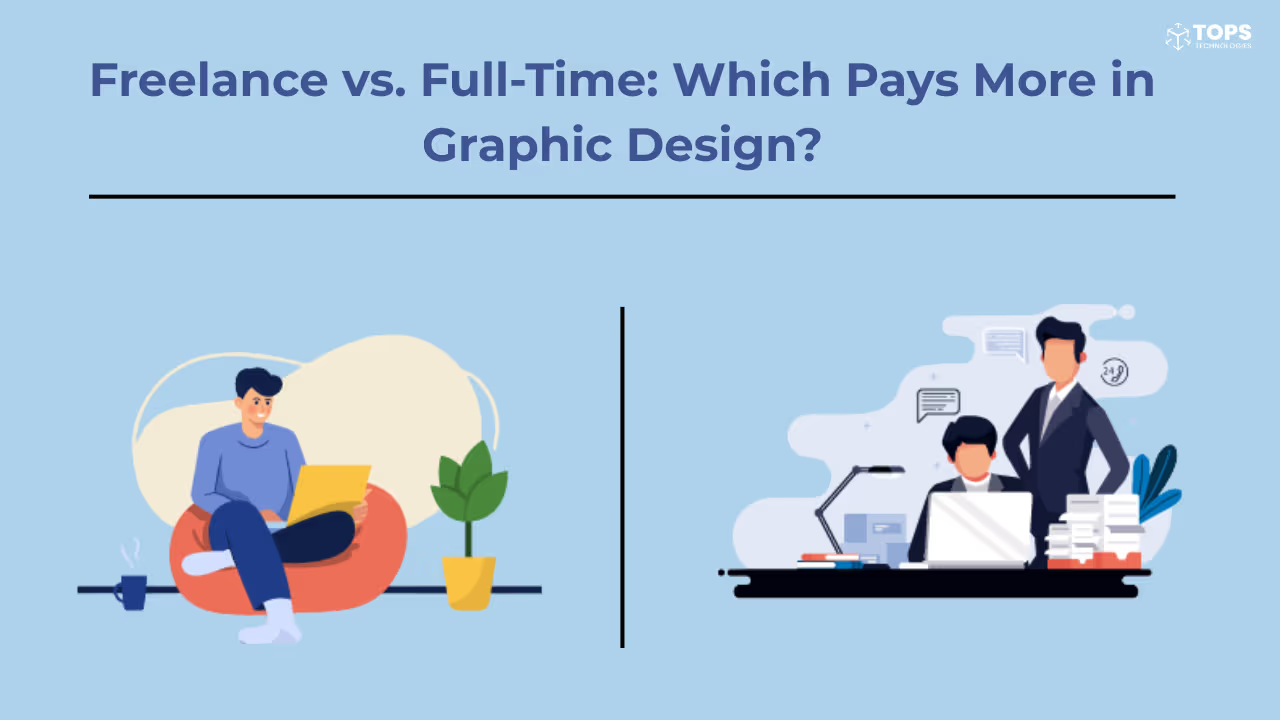
At some point, most growing companies hit the same wall. The product is evolving, the backlog of design work is real, and the current approach — whether that’s a single in-house designer, a rotating cast of freelancers, or an agency retainer — isn’t keeping pace. The work slows down, quality becomes inconsistent, or the costs start climbing faster than the output justifies.
This is not a rare situation. It reflects a structural tension between how design work actually flows inside a business and the models traditionally used to deliver it. Understanding that tension requires looking honestly at each option — not in terms of which sounds best on paper, but which holds up under sustained operational pressure.
What UI as a Service Actually Means in Practice
The term gets used in different ways, but at its core, ui as a service refers to a subscription-based design model where a company pays a fixed recurring fee to access ongoing UI design work — without hiring full-time staff or engaging project-by-project. Requests are submitted, prioritized, and completed within a defined workflow. There’s no renegotiating contracts for each task, no recruitment cycle, and no gap period when a designer leaves.
For teams that produce continuous product work — feature rollouts, dashboard updates, internal tools, landing pages, or onboarding flows — this model fits the actual rhythm of the work. Design is not a one-time project in most modern companies. It’s a recurring operational function. A subscription model treats it that way.
What distinguishes this model from the alternatives is the predictability it introduces. Costs are fixed. Turnaround expectations are established upfront. There’s no need to source a new designer each time a new initiative begins. For product managers, founders, or operations teams managing multiple workstreams, that consistency has real value — not just as a convenience, but as a risk-reduction measure.
The Operational Logic Behind the Model
Design delays have downstream consequences. A feature waiting on a UI mockup holds up engineering. A marketing campaign missing landing page assets misses its window. When design work is unpredictable in availability or turnaround, it becomes a bottleneck rather than an accelerant.
Subscription-based UI design addresses this by decoupling design capacity from individual availability. The service continues regardless of holidays, illness, or capacity shifts on any one person’s end. For smaller teams without a dedicated design department, this continuity matters more than any individual designer’s skill level in isolation.
The Reality of Working With Freelance Designers
Freelance designers can be excellent. Many are highly skilled, responsive, and capable of producing work that rivals or exceeds agency output. The challenge is not quality — it’s consistency and availability at scale.
Freelancers are independent operators. They manage their own schedules, client loads, and availability. When a freelancer is busy with another client, your project waits. When they move on entirely — to full-time work, to a different niche, or simply because they’re in demand — the institutional knowledge they’ve built about your product and brand walks out with them.
The Hidden Cost of Freelance Dependency
The most underappreciated cost of relying on freelancers is not their hourly rate. It’s the time spent sourcing, briefing, reviewing, and rebuilding context every time someone new enters the picture. Each new engagement requires a ramp-up period. The freelancer needs to understand the product, the users, the existing design system if one exists, and the tone of the brand. That onboarding time is real, and it compounds across multiple engagements.
For businesses running at a consistent pace of product development, this repeated investment in orientation becomes a drag on the team’s bandwidth. Project managers end up spending significant energy managing design relationships rather than managing design outcomes.
When Freelancers Make Sense
Freelancers remain a reasonable option in specific scenarios — a one-time campaign, a defined project with a hard deadline, or a situation where highly specialized expertise is needed for a short duration. The mismatch occurs when companies try to use freelancers as a substitute for an ongoing design function. That’s where the model’s limitations become most visible.
Design Agencies: Capability vs. Commercial Reality
Traditional design agencies offer something that neither freelancers nor most subscription services can easily match: multi-disciplinary teams, research infrastructure, and broad strategic capability. For a rebrand, a major product overhaul, or a campaign requiring deep research and creative direction, an established agency has genuine advantages.
The issue for most growing businesses is that agencies are built around project engagements, not ongoing operational support. Their pricing models, resourcing structures, and contract terms reflect that. Engagements are scoped in advance, often at a significant investment, and billed against defined deliverables. Anything outside that scope requires renegotiation.
The Scalability Problem With Agency Models
Scaling with an agency means either expanding the scope of existing contracts or layering in new engagements as needs grow. Neither approach is particularly efficient. Scope expansion often takes weeks to negotiate, approve, and resource. New engagements require their own briefing and discovery process. The result is that agencies, despite their capacity, often move slowly relative to the speed at which internal product teams need to operate.
There’s also a structural misalignment in how agencies think about clients. The design management literature has long noted the tension between creative service providers and clients who need design to function as an embedded operational capability rather than an external service. Agencies are optimized for projects. Most growing companies need a function.
Agency Relationships That Work Well
Agencies tend to deliver best value when the scope is genuinely large, strategic, and bounded — a full product redesign, a brand identity system, or a significant research-led initiative. Businesses that try to run their day-to-day design operations through an agency retainer often find the model too slow and too expensive for that purpose. The fit is simply not there for operational, ongoing work.
What Scaling Design Actually Requires
Scaling is often discussed as if it simply means doing more of the same thing. In design operations, that’s rarely accurate. As a company grows, design needs don’t just increase in volume — they diversify. More product surfaces, more internal tools, more marketing channels, more handoff requirements with engineering. The design function has to respond across all of these simultaneously, not sequentially.
A freelancer cannot absorb that diversification without significant coordination overhead. An agency engagement cannot pivot quickly enough to cover ad hoc needs across multiple teams. An in-house team can, but it requires hiring, management, and ongoing investment in tooling and process — which is out of reach for many companies at an early or mid-growth stage.
Continuity as a Scaling Factor
One underappreciated element of scale is continuity. Design systems, component libraries, style guides, and interaction patterns accumulate value over time — but only if someone maintains them consistently. When design work is fragmented across freelancers or project-based agencies, these assets degrade or diverge. New work doesn’t build on what came before; it recreates it.
A subscription design model, by contrast, maintains a persistent relationship with the product. The team delivering the work understands what has already been built, what conventions are in place, and how new requests fit into the existing system. Over time, this reduces briefing time, reduces rework, and produces more coherent output.
Flexibility Without Overhead
Another practical consideration is what happens when demand spikes. A product launch, a fundraising cycle, a new market entry — these create temporary surges in design workload. Companies relying on freelancers need to source additional support quickly, often at premium rates under time pressure. Agencies may not be able to respond at all within a useful timeframe. Subscription models, depending on the tier, allow for adjustment without the sourcing and onboarding friction.
Making the Right Choice for Your Situation
No single model is universally correct. The right approach depends on the nature of the design work, the pace of the business, and how central design is to the product’s ongoing development.
• Freelancers work best for bounded, specialist tasks where the scope is clear, the timeline is fixed, and continuity is not a requirement.
• Design agencies are well-suited for large strategic initiatives, brand work, or major redesigns where research, creative direction, and multi-disciplinary input genuinely add value.
• Subscription-based UI design models are best suited for companies with continuous, varied design needs across product, marketing, and internal tools — where consistency, predictability, and operational continuity matter more than occasional bursts of high-end creative strategy.
The mistake most companies make is choosing a model based on how they think about design rather than how they actually use it. If design functions as an ongoing operational need — which it does for most product-led or digitally active companies — then it deserves an operational solution, not a project-based one.
Conclusion
The comparison between subscription UI design, freelancers, and agencies ultimately comes down to what a business actually needs from design on a week-to-week basis. For companies that treat design as a continuous function rather than a series of isolated projects, the model that eliminates sourcing friction, maintains consistency, and scales with demand without significant overhead is the one that holds up longest.
Freelancers offer flexibility. Agencies offer depth. But neither is built to function as an ongoing design department. For teams that need predictable output, maintained context, and scalable capacity without the overhead of hiring, a subscription approach to UI design reflects how modern product work actually operates — not how it was organized a decade ago.
The question worth asking is not which model sounds most appealing in theory. It’s which one will still be working reliably when the pace increases, the team grows, and the design backlog doesn’t slow down to wait for the process to catch up.
