

Software releases that involve document-heavy workflows carry a specific category of risk that general QA frameworks were not designed to address. When an application processes contracts, invoices, certificates, forms, or identity documents, the consequences of misidentification or failed recognition extend well beyond a failed test case. They ripple into compliance obligations, data integrity, and downstream system behavior that may not surface until a client or regulator raises the issue.
QA engineers working in industries where documents are core to the product — whether that’s financial services, healthcare, logistics, legal technology, or enterprise software — often inherit testing approaches that treat document processing as a secondary concern. It gets folded into integration testing or handled with a handful of sample files, which leaves entire categories of failure unaddressed.
The reality is that document detection is a discipline with its own failure modes, its own edge cases, and its own operational logic. Building a structured framework around it before a release, rather than discovering gaps after one, is one of the more consequential decisions a QA team can make.
What Document Detection Actually Requires From a QA Perspective
Document detection refers to the automated identification, classification, and validation of document types within a processing pipeline. A system might need to distinguish a signed contract from an unsigned draft, identify whether an uploaded file is a government-issued ID or a utility bill, or confirm that a scanned invoice contains the fields expected before routing it for approval. Each of these tasks involves a combination of structural recognition, content parsing, and rule-based or model-driven classification.
For QA teams approaching this for the first time or trying to formalize what has been an informal process, a structured Document Detection guide provides a useful foundation for understanding what the system is expected to do before you begin designing test cases around what might go wrong.
The first discipline a QA engineer must develop is distinguishing between detection and extraction. Detection confirms that a document exists and identifies what type it is. Extraction retrieves data from within that document. These two operations are logically separate, and failures in each have different causes and different impacts. A system can detect a document correctly but extract data from the wrong region. It can also extract content accurately from a document it has misclassified entirely, producing data that is technically present but contextually wrong.
Classification Confidence and Its Operational Impact
Most document detection systems assign a confidence score to each classification decision. A system might be highly confident that an uploaded file is a purchase order, moderately confident it is a contract, or uncertain between two document types it considers similar in structure. How the system behaves at low confidence thresholds is a critical testing surface that many QA plans underweight.
If the system routes a low-confidence classification to a human review queue, that queue may become a bottleneck under load. If it proceeds automatically, it risks downstream processing errors. Neither outcome is inherently wrong — both are design decisions — but QA must verify that the actual system behavior matches the intended behavior across the full range of confidence levels, not just in the cases where the system is certain.
Format Variability as a Primary Test Driver
The same document type will arrive in multiple formats, qualities, and orientations in any real production environment. A scanned invoice differs from a digitally generated one. A photograph taken at an angle differs from a flatbed scan. A multi-page PDF with embedded images differs from a single-page text-based document. Document detection logic that performs reliably in controlled conditions can degrade quickly when exposed to the variability of real-world input.
Building a test corpus that reflects actual input variability — not idealized sample files — is one of the more time-consuming parts of QA preparation, but it is also one of the highest-value investments a team can make before a release. The goal is not to find every possible file the system might encounter, but to represent the range of conditions that affect detection accuracy.
Structuring the Test Environment Before Writing a Single Test Case
Many testing failures in document detection pipelines originate not from poorly written test cases, but from test environments that do not reflect production conditions. A system tested against a clean, consistent file set in a staging environment can behave very differently when it encounters the volume, format diversity, and timing pressures of a live deployment.
The test environment should include the same preprocessing steps the production system uses. If documents are compressed, converted, resized, or normalized before detection runs, those transformations must happen in testing as well. Skipping them creates a false baseline — the system passes tests on clean input that production will never deliver.
Establishing a Baseline Before Regression Testing Makes Sense
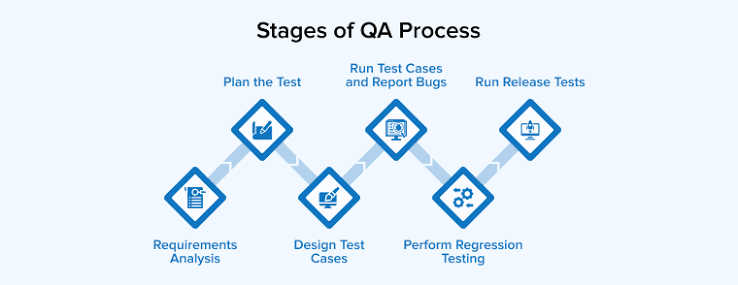
Regression testing for document detection only has value if there is a clear, documented baseline to compare against. That baseline should capture detection accuracy across the document types the system is expected to handle, the formats it must support, and the confidence thresholds it is configured to apply. Without this baseline, changes to the detection model or underlying configuration cannot be evaluated in any meaningful way.
Establishing a baseline also means making explicit decisions about acceptable failure rates. No automated detection system achieves perfect accuracy across all document types and all input conditions. QA teams and product owners need to agree on what level of misclassification is operationally acceptable, under what conditions, and for which document types. A missed classification on a low-stakes informational document carries different weight than one on a legal instrument or a financial record.
Boundary Conditions That Deserve Dedicated Test Cases
Beyond format variability, there are structural boundary conditions that deserve their own place in the test plan. These include documents that contain mixed content — a form with both printed and handwritten fields, for example, or a PDF that embeds scanned pages alongside digital text. They also include documents that fall partially outside the system’s trained scope, where the expected behavior may be to flag the document for review rather than classify it incorrectly.
Corrupt or incomplete files represent another boundary condition that is easy to neglect. A real production environment will eventually receive files that are truncated, password-protected, encoded in an unexpected character set, or otherwise malformed. The system’s response to these inputs — whether it fails gracefully, raises a clear error, or attempts to process the file and produces unreliable output — should be a documented and tested behavior, not a discovered one.
Integrating Document Detection Testing Into the Release Cycle
One of the more persistent structural problems in QA planning is that document detection testing gets scheduled late, often because it depends on other parts of the system being stable first. The detection module needs the file ingestion layer to work, and the ingestion layer needs the storage configuration to be finalized. By the time everything is in place, the release window has narrowed and detection testing gets compressed.
The way to avoid this is to decouple detection testing from the rest of the integration timeline wherever possible. Detection logic can often be tested in isolation using file inputs fed directly to the classification service, without the full pipeline being available. This requires agreement early in the release cycle about what the detection component’s interface looks like and what outputs it is expected to produce — but that clarity is itself a valuable outcome of the planning process.
Coordinating With Model Versioning and Configuration Changes
Document detection systems that use machine learning components introduce a versioning challenge that rule-based systems do not. When the underlying model is updated — even as a minor patch — the classification behavior across the document corpus can shift in ways that are not immediately obvious. A model update intended to improve performance on one document type may reduce accuracy on another.
The systematic discipline of software testing addresses this through controlled comparison: running the same test corpus through the previous model version and the new one, then evaluating the differences before promoting the update. This is not always standard practice in organizations where model updates are treated as configuration changes rather than code changes, but the risk profile is the same.
Logging and Observability as a Testing Asset
Detailed logging from the detection pipeline is not just an operational tool — it is a testing asset. When logs capture not only the classification outcome but the confidence score, the preprocessing steps applied, and the processing time for each document, QA teams can use that data to identify patterns in failure conditions that would otherwise remain invisible. A cluster of misclassifications in documents processed during peak load hours, for example, may point to a resource constraint rather than a model accuracy issue.
Building logging requirements into the QA plan, and validating that logs produce the expected data during testing, closes a gap that many teams discover only when they need to investigate a production incident.
Closing: Building Confidence Before the Release, Not After
A release involving document detection is not like a release involving a user interface or a reporting module. The failure modes are less visible, the edge cases are more numerous, and the consequences of getting it wrong often arrive days or weeks after deployment, when a misclassified document has already moved through several downstream processes.
The framework described here does not guarantee that every possible problem will be caught before a release. No framework does. What it does is create a structured approach to identifying what the system must do, what conditions it must handle, and where the acceptable boundaries of its performance lie. That clarity makes testing more precise and makes the release decision more defensible.
QA engineers who invest time in building this structure before a release — defining baselines, constructing realistic test corpora, decoupling detection testing from pipeline dependencies, and establishing logging expectations — consistently report fewer post-release surprises and faster resolution times when issues do occur. The investment is front-loaded, but the cost of not making it is distributed across the entire production lifecycle in ways that are harder to contain and harder to explain.
Before the next release that touches document processing, the question is not whether to build this framework. The question is how much of it already exists and what needs to be added to make it complete.
