

From X-Rays to 3D Scans: How Technology Is Changing the Everyday Dental Visit
For many people, a trip to the dentist still brings back memories of film X-rays, trays of sticky impression putty and a lot of guesswork about what is actually going on inside their mouth. Over the last two decades, that picture has changed. Digital tools now play a part in almost every stage of a dental visit, from the first check-up to planning complex treatment.
Technology doesn’t replace a dentist’s skill and judgement, but it does change how problems are found, how treatment is planned and, just as importantly, how clearly it is explained to patients. Here is what the most common tools do and what they mean for you in the chair.
[IMAGE 1]
Digital X-Rays: Faster Images, Clearer Detail
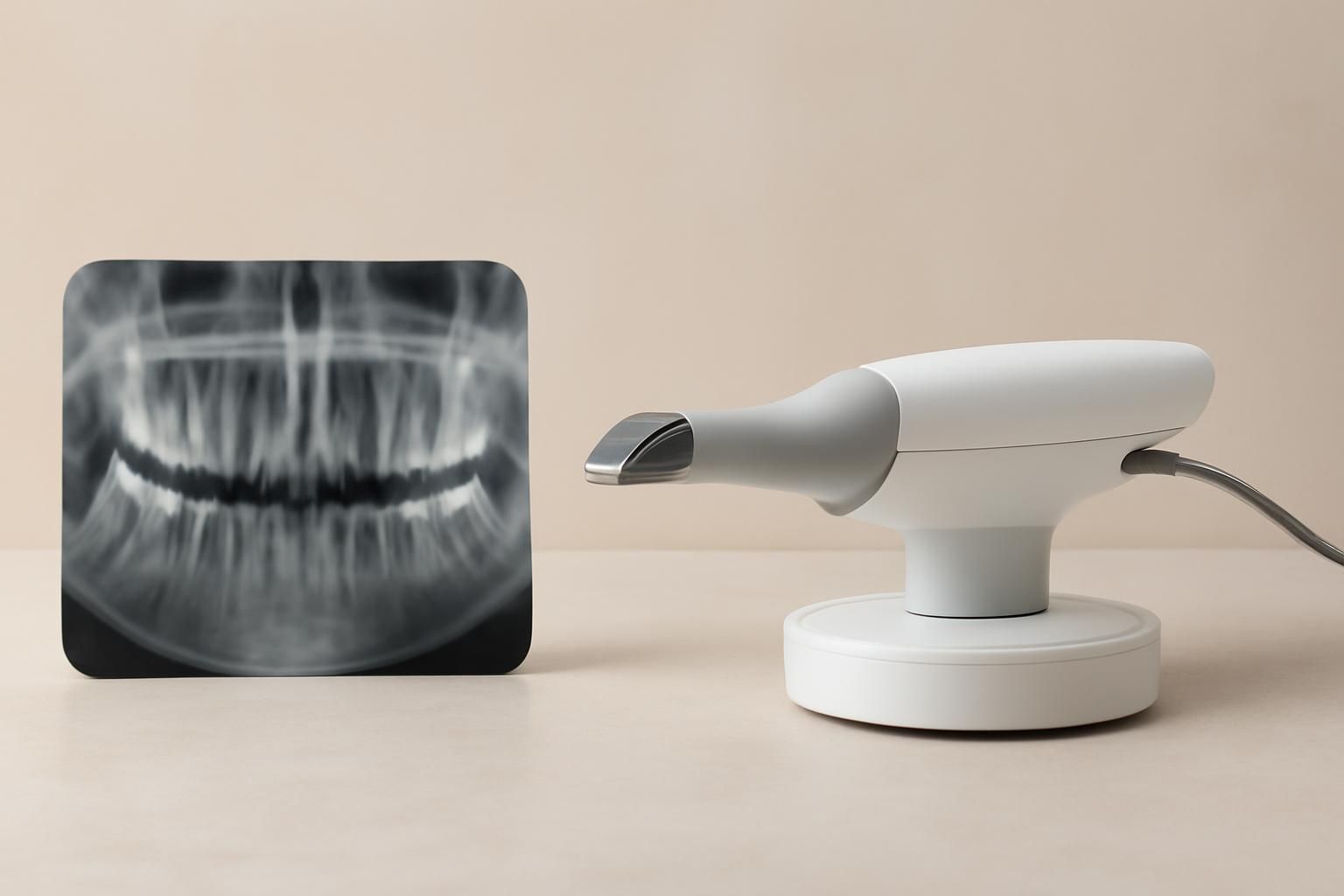
Digital radiography has largely replaced traditional film in many practices. Instead of waiting for film to be developed, the image appears on a screen within seconds. Dentists can zoom in, adjust contrast and compare today’s image side by side with earlier ones to spot slow changes over time.
Digital X-rays generally need a lower radiation dose than traditional film X-rays, and dental X-rays are already among the lowest-dose X-rays used in healthcare. Your dentist will still only take them when they are genuinely needed, based on your history and risk.
Intraoral Cameras: Seeing What Your Dentist Sees
An intraoral camera is a small, pen-sized camera that captures close-up images of individual teeth and gums. The pictures appear on a screen next to the chair, so a cracked filling, an early area of decay or a build-up of tartar is no longer something you simply have to take your dentist’s word for.
This sounds like a small change, but it makes a big difference to understanding. When patients can see a problem for themselves, it is much easier to have an honest conversation about the options, including the option to monitor something rather than treat it straight away.
3D Scanning: Goodbye to Most Impression Putty
Intraoral scanners use a small handheld wand to capture thousands of images, which software stitches together into an accurate 3D model of the teeth and bite. For many treatments they replace the traditional tray of impression material that some patients find uncomfortable.
These digital models are used to plan and make crowns, clear aligners, night guards and other restorations. Because the scan is digital, it can be stored, compared over time and sent straight to a dental laboratory without posting physical moulds.
For dental implants, dentists may also use cone beam CT (CBCT) scans, which give a three-dimensional view of the jawbone. This helps them check bone height and width and plan the position of an implant before treatment begins.
A Quick Guide to Common Dental Technology
| Technology | What it does | What it means for patients |
| Digital X-rays | Captures images of teeth and bone on screen in seconds | Quicker results, lower dose than film, easy comparison over time |
| Intraoral camera | Takes close-up photos inside the mouth | You can see problems on screen and understand your options |
| Intraoral 3D scanner | Creates a digital 3D model of teeth and bite | Often replaces impression putty; used for crowns, aligners and guards |
| CBCT (3D X-ray) | Shows the jawbone in three dimensions | More detailed planning for implants and complex cases |
| Digital records and reminders | Stores notes, images and appointment history securely | Easier follow-up and fewer missed check-ups |
Technology Supports Care, It Doesn’t Replace It
It is easy to assume the newest equipment automatically means the best result, but that isn’t how dentistry works. A scan or image is only as useful as the person interpreting it. Training, experience and taking time to listen to the patient still matter most.
Not every practice uses every tool, and not every patient needs them. A routine check-up for someone with healthy teeth may need very little technology at all, while planning an implant or a full set of aligners usually relies on detailed digital records.
If you are choosing a new practice, it is reasonable to ask how technology is used in your care. For example, someone looking for a dentist in St Albans might ask whether X-rays are digital or how implant treatment is planned. Established local practices such as St Peter’s Lodge Dental Practice can talk you through how each step of a treatment is planned, so you know what to expect before anything begins.
Frequently Asked Questions
Are digital dental X-rays safe?
Dental X-rays use a very low dose of radiation, and digital X-rays generally need less than traditional film. Dentists only take them when there is a clear reason to.
Does a 3D dental scan hurt?
No. An intraoral scan uses a small wand moved around the teeth. Most people find it more comfortable than traditional impression putty.
Does every dentist use 3D scanning?
Not every practice does, and not every treatment needs it. It is most often used for crowns, aligners, implants and similar work.
How often do I need dental X-rays?
Only when there is a clinical reason. Your dentist decides based on your history, your risk of decay and any symptoms you have.
What is an intraoral camera?
A small, pen-sized camera that takes close-up pictures inside your mouth and shows them on a screen, so you can see what your dentist sees.
What is a CBCT scan used for?
A CBCT scan gives a 3D view of the teeth and jawbone. It is mainly used to plan dental implants and other complex treatment.
Are my digital dental records kept securely?
Dental practices in the UK must store patient records securely under data protection law. You can ask your practice how your information is kept.
Does more technology mean treatment costs more?
Not necessarily. Costs vary by practice and treatment, so ask for a clear written plan and estimate before any treatment starts.
The Bottom Line
Dental technology has quietly transformed the everyday visit. Faster images, clearer explanations and more precise planning help both dentists and patients make better decisions. The real benefit comes when that technology is used by an experienced team who takes the time to explain what they see, so you can make confident choices about your own oral health.
5. Author Bio
Dr Meera Vekaria is an implant and cosmetic dentist at St Peter’s Lodge Dental Practice in St Albans, Hertfordshire (GDC No. 229393). Her qualifications include BChD, MJDF RCS Eng, MFDS RCS Ed and a Diploma in Implant Dentistry from the Eastman Dental Institute (UCL). With more than 10 years in practice, she has a special interest in restorative and cosmetic dentistry and dental implant treatment.
__________________________________________________
6. On-Page SEO Package
| Item | Details |
| Focus keyword (article topic) | dental technology |
| Secondary keywords | digital dental X-rays, 3D dental scanning, intraoral camera |
| SEO title (meta title) | How Technology Is Changing the Everyday Dental Visit |
| Meta description | Digital X-rays, intraoral cameras and 3D scans are changing how dentists check, plan and explain treatment. A dentist explains what each one means for patients. |
| URL slug | /how-technology-is-changing-dental-visits/ |
| H1 | From X-Rays to 3D Scans: How Technology Is Changing the Everyday Dental Visit |
| H2 headings | Digital X-Rays: Faster Images, Clearer Detail • Intraoral Cameras: Seeing What Your Dentist Sees • 3D Scanning: Goodbye to Most Impression Putty • A Quick Guide to Common Dental Technology • Technology Supports Care, It Doesn’t Replace It • Frequently Asked Questions • The Bottom Line |
| Featured image file | digital-dental-scan-consultation.jpg |
| Image alt text | Dentist showing a patient a 3D digital scan of her teeth on a screen beside the dental chair |
| Client link (in article) | dentist in St Albans → https://www.stpeterslodgedentalpractice.co.uk/ (dofollow, 1 link only) |
| Author bio link | Dr Meera Vekaria → https://www.stpeterslodgedentalpractice.co.uk/about-us/meet-the-team/meera-vekaria/ (dofollow) |
| FAQ section | “Frequently Asked Questions” in the article (8 questions) |
| Schema to add | BlogPosting + FAQPage (JSON-LD in Section 7) |
7. Schema Markup (JSON-LD)
Please add the code below to this post (in the page head, or in the custom schema / custom code field of your SEO plugin). Once the featured image is uploaded, replace the “image” URL with its real URL. The FAQPage schema matches the “Frequently Asked Questions” section in the article (8 questions), so please keep that section as written.
<script type=”application/ld+json”>
{
“@context”: “https://schema.org”,
“@graph”: [
{
“@type”: “BlogPosting”,
“@id”: “https://techsuppose.com/how-technology-is-changing-dental-visits/#article”,
“mainEntityOfPage”: “https://techsuppose.com/how-technology-is-changing-dental-visits/”,
“headline”: “From X-Rays to 3D Scans: How Technology Is Changing the Everyday Dental Visit”,
“description”: “Digital X-rays, intraoral cameras and 3D scans are changing how dentists check, plan and explain treatment. A dentist explains what each one means for patients.”,
“inLanguage”: “en-GB”,
“image”: “https://techsuppose.com/wp-content/uploads/digital-dental-scan-consultation.jpg”,
“author”: {
“@type”: “Person”,
“name”: “Dr Meera Vekaria”,
“jobTitle”: “Implant and Cosmetic Dentist”,
“url”: “https://www.stpeterslodgedentalpractice.co.uk/about-us/meet-the-team/meera-vekaria/”,
“worksFor”: {
“@type”: “Dentist”,
“name”: “St Peter’s Lodge Dental Practice”,
“url”: “https://www.stpeterslodgedentalpractice.co.uk/”
}
},
“publisher”: {
“@type”: “Organization”,
“name”: “techsuppose.com”,
“url”: “https://techsuppose.com/”
},
“keywords”: “dental technology, digital dental X-rays, 3D dental scanning, intraoral camera”
},
{
“@type”: “FAQPage”,
“@id”: “https://techsuppose.com/how-technology-is-changing-dental-visits/#faq”,
“mainEntity”: [
{
“@type”: “Question”,
“name”: “Are digital dental X-rays safe?”,
“acceptedAnswer”: {
“@type”: “Answer”,
“text”: “Dental X-rays use a very low dose of radiation, and digital X-rays generally need less than traditional film. Dentists only take them when there is a clear reason to.”
}
},
{
“@type”: “Question”,
“name”: “Does a 3D dental scan hurt?”,
“acceptedAnswer”: {
“@type”: “Answer”,
“text”: “No. An intraoral scan uses a small wand moved around the teeth. Most people find it more comfortable than traditional impression putty.”
}
},
{
“@type”: “Question”,
“name”: “Does every dentist use 3D scanning?”,
“acceptedAnswer”: {
“@type”: “Answer”,
“text”: “Not every practice does, and not every treatment needs it. It is most often used for crowns, aligners, implants and similar work.”
}
},
{
“@type”: “Question”,
“name”: “How often do I need dental X-rays?”,
“acceptedAnswer”: {
“@type”: “Answer”,
“text”: “Only when there is a clinical reason. Your dentist decides based on your history, your risk of decay and any symptoms you have.”
}
},
{
“@type”: “Question”,
“name”: “What is an intraoral camera?”,
“acceptedAnswer”: {
“@type”: “Answer”,
“text”: “A small, pen-sized camera that takes close-up pictures inside your mouth and shows them on a screen, so you can see what your dentist sees.”
}
},
{
“@type”: “Question”,
“name”: “What is a CBCT scan used for?”,
“acceptedAnswer”: {
“@type”: “Answer”,
“text”: “A CBCT scan gives a 3D view of the teeth and jawbone. It is mainly used to plan dental implants and other complex treatment.”
}
},
{
“@type”: “Question”,
“name”: “Are my digital dental records kept securely?”,
“acceptedAnswer”: {
“@type”: “Answer”,
“text”: “Dental practices in the UK must store patient records securely under data protection law. You can ask your practice how your information is kept.”
}
},
{
“@type”: “Question”,
“name”: “Does more technology mean treatment costs more?”,
“acceptedAnswer”: {
“@type”: “Answer”,
“text”: “Not necessarily. Costs vary by practice and treatment, so ask for a clear written plan and estimate before any treatment starts.”
}
}
]
}
]
}
</script>
