

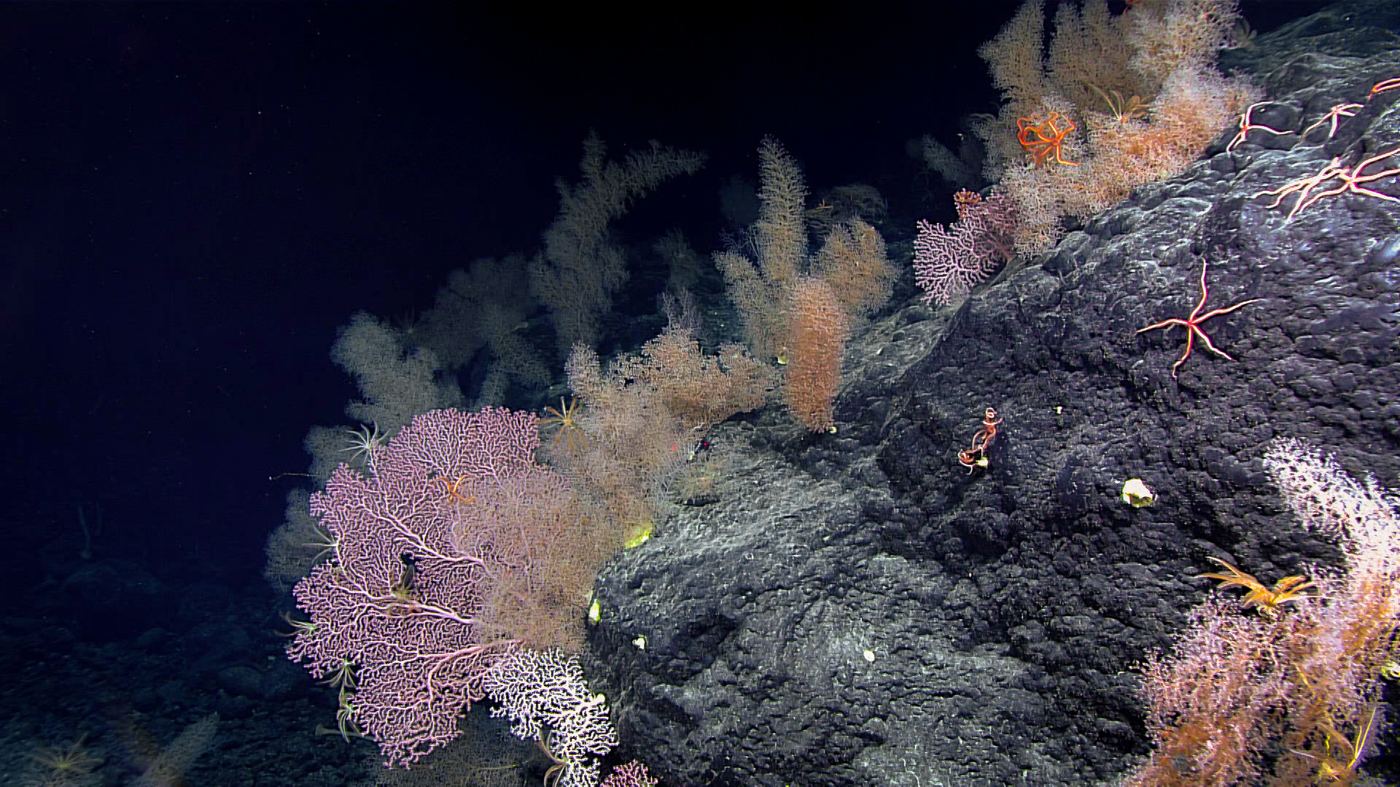
Scientists have found corals estimated to be around 1,000 years old thriving in a remote part of the Atlantic Ocean, alongside squids, octopuses and sponge gardens thousands of metres below the surface. The discoveries came during a 35-day expedition aboard the Schmidt Ocean Institute’s research vessel Falkor (too), exploring the Romanche Fracture Zone, a rugged section of the mid-Atlantic ridge where North Atlantic Deep Water meets Antarctic Bottom Water. The findings were reported on 25 November 2026. Using the robot submersible SuBastian, the team imaged a sunken atoll of fossilised coral rising 300 metres from the ocean floor, nearly as tall as the Eiffel Tower, and found sponge and coral gardens at a depth of 4,300 metres.
What the Evidence Shows
The corals’ ages were estimated from their size, because these deep-water corals grow only a few millimetres each year, meaning the largest specimens have been alive since the time of the Crusades and the Mongol conquests. Animals were documented across four regions at depths from 600 to 4,000 metres, in a place that was long thought to be a lifeless crack in the seabed. Chief scientist Dr Jose Angel Perez said the expedition produced the first scientific evidence confirming the region’s ecological uniqueness, and the team argues the findings strengthen the case for protecting the area under the High Seas Treaty. The Schmidt Ocean Institute’s executive director, Dr Jyotika Virmani, called the thriving ecosystems atop a prehistoric coral atoll an extraordinary reminder that the ocean still holds monumental secrets. Reporting and analysis from sources such as National Science Foundation track the same developments, and specialists following the thousand-year-old Atlantic corals say the direction is now consistent across independent lines of evidence.
The Wider Context
The wider context is a research landscape in which replication and open data now decide reputations. Findings connected to the thousand-year-old Atlantic corals are being checked by independent groups with shared datasets, and the teams involved publish their methods in full so rivals can test every step. That discipline is slower than a headline cycle, but it is why results in this area increasingly survive first contact with scrutiny.
What Happens Next
What happens next in the story of the thousand-year-old Atlantic corals will be decided by follow-up work already under way: larger samples, longer observation and instruments that have not yet come online. The researchers involved are unusually united on one point, that the current results justify the next investment of time and money. Readers will not have to wait long for the first tests of that claim. You can follow related developments in our coverage of science.
There is a practical lesson in all of this for readers deciding what to do today. Start with the verified facts, be wary of anyone promising certainty, and prefer reversible steps while the evidence is still developing. Circumstances differ by country, income and personal situation, so general guidance should always be weighed against your own context before you act on it in any significant or lasting way.
