

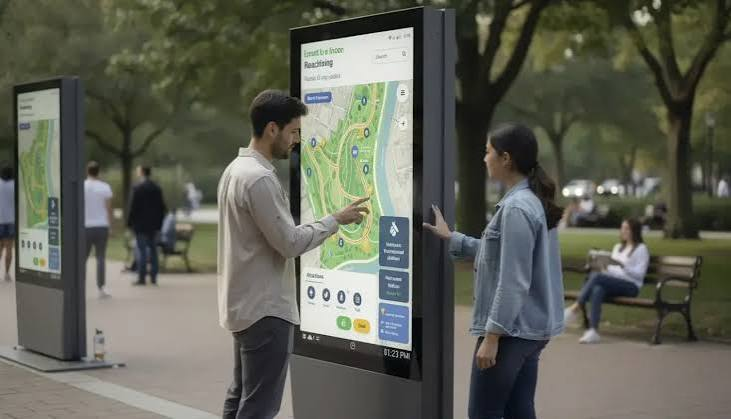
Deploying self-service equipment outdoors is a fundamentally different undertaking than installing the same hardware inside a controlled environment. Indoor kiosks operate in stable temperatures, protected from moisture, and surrounded by staff who can intervene when something goes wrong. Outdoor installations offer none of those advantages. Weather is unpredictable. Foot traffic is harder to manage. Vandalism is a genuine operational concern. And when a unit fails at an outdoor location, the cost of that failure extends beyond the repair ticket — it affects revenue, queue management, and customer experience simultaneously.
For operators across transit, parking, hospitality, retail, and municipal services, the decision to install outdoor self-service kiosks carries real operational weight. Getting it right requires understanding not just what the hardware does, but how it behaves under sustained real-world conditions. That means thinking through enclosure integrity, payment reliability, software behavior during connectivity interruptions, and what ongoing maintenance actually looks like when units are spread across multiple outdoor sites.
This guide is structured for operators and procurement teams who are past the awareness stage and working through the evaluation process. It covers the factors that matter most before a purchase decision is made — and the ones that tend to get overlooked until after installation.
What Makes Outdoor Kiosk Deployment Fundamentally Different
The distinction between indoor and outdoor kiosk deployment is not primarily about weatherproofing. It runs deeper than that. Outdoor units operate without the ambient support structure that indoor environments provide — climate control, consistent lighting, physical security, and staff proximity. Each of those missing elements introduces a category of risk that operators must account for before purchasing. The Kiosks Outdoor guide published by specialists in this area outlines how these environmental and operational pressures translate into specific hardware and service requirements that differ meaningfully from standard deployments.
Understanding this distinction matters because operators who source outdoor kiosks using the same criteria they apply to indoor units frequently encounter reliability problems within the first year. The hardware may function correctly in a showroom or warehouse setting and still underperform in an exposed outdoor location where temperature swings, direct sunlight, and precipitation introduce stress that controlled environments never replicate.
Environmental Stress Is Cumulative, Not Episodic
One of the most important things operators learn after their first outdoor deployment is that environmental damage is rarely the result of a single extreme event. A kiosk that survives a heavy rainstorm does not necessarily emerge unharmed. Moisture infiltrates slowly through seals that degrade over time. Thermal cycling — the repeated expansion and contraction of components as temperatures rise and fall — gradually weakens connections that appear solid during initial installation. UV exposure affects screen readability and housing integrity progressively, not all at once.
This cumulative nature of environmental stress means that hardware specifications need to account for sustained exposure, not just peak conditions. A unit rated for temporary exposure to rain performs differently from one engineered to maintain seal integrity through thousands of daily temperature cycles over several years. Operators who focus exclusively on upfront performance metrics and ignore long-term durability data often find themselves facing replacement costs much earlier than projected.
Remote Management Becomes a Core Operational Requirement
Indoor kiosks can be monitored by staff who are physically present and can identify problems visually. Outdoor units are typically deployed at locations where staffing is limited or absent entirely — parking structures, transit platforms, park entrances, highway rest stops. At these sites, the only way to detect a failure before it affects a significant number of users is through remote monitoring infrastructure built into the system from the start.
Remote management for outdoor kiosks outdoor environments should include real-time hardware health monitoring, remote software diagnostics, connectivity status alerts, and the ability to push software updates without requiring a technician visit. Operators who treat remote management as an optional feature tend to discover its value after their first undetected multi-day outage at a high-traffic site.
Hardware Integrity and Enclosure Standards
Enclosure design is where outdoor kiosk performance is largely determined before any software or payment functionality is ever considered. The physical housing of a kiosk defines how well the internal components are protected from the conditions they will encounter — and in outdoor deployments, those conditions include direct precipitation, humidity, dust, debris, temperature extremes, and in some locations, deliberate physical interference.
Enclosure standards for outdoor equipment are defined by internationally recognized protection ratings, which classify how well a housing resists ingress from solids and liquids. The International Electrotechnical Commission maintains these standards, which are widely used as reference benchmarks by manufacturers and procurement teams evaluating outdoor-rated equipment. Operators should confirm that any kiosk being evaluated for outdoor use carries a rating appropriate for the specific deployment environment — a coastal installation faces different conditions than an inland urban sidewalk.
Thermal Management Inside the Enclosure
Heat is one of the most consistent causes of premature component failure in outdoor kiosks. Direct sunlight raises the surface temperature of an enclosure significantly above ambient air temperature. In regions with high summer temperatures, this can push internal temperatures well beyond the operating range of standard consumer-grade components. At the same time, systems deployed in northern climates must maintain reliable operation through sub-freezing conditions that affect screen responsiveness, battery backup systems, and payment hardware.
Effective outdoor enclosures manage this through a combination of insulation, internal fans or cooling systems, heaters for cold climates, and thermal material selection that reflects rather than absorbs solar energy. Operators evaluating hardware should ask vendors specifically how thermal management is handled across the full temperature range expected at the deployment site — not just at average conditions, but at seasonal extremes.
Vandalism Resistance and Physical Security
Outdoor kiosks are more exposed to physical interference than their indoor counterparts. This ranges from opportunistic tampering to deliberate attempts to access internal components or defeat payment hardware. Physical security requirements vary by deployment context — a kiosk at a staffed transit hub faces different risk than one at an unstaffed overnight parking facility — but the design principles are consistent.
Housing materials, fastener types, screen protection, and cable management all contribute to the physical security profile of a kiosk. Units designed for high-risk outdoor environments typically use reinforced housing, tamper-evident or tamper-resistant fasteners, and screens rated for impact resistance. Payment hardware should be designed to trigger alerts or disable transactions in response to detected tampering, which is a standard expectation in regulated payment environments.
Payment Processing in Uncontrolled Environments
Payment functionality in kiosks outdoor settings introduces a specific set of compliance and reliability considerations that do not apply with the same urgency to indoor units. When a payment terminal is located outdoors, the conditions affecting its physical hardware — moisture, temperature, UV exposure — also affect the consistency of transaction processing. Card readers that function reliably indoors may experience contact failures in environments with high humidity. Touchscreens calibrated for indoor lighting often become difficult to read in direct sunlight, which affects the user’s ability to complete payment flows accurately.
Beyond hardware performance, outdoor payment terminals must meet the same compliance standards that govern all unattended payment environments. This includes current PCI DSS requirements for cardholder data security, which apply regardless of whether a kiosk is inside or outside a building. Operators should verify that any outdoor payment hardware they source is certified for unattended use, not simply approved for attended retail environments where staff presence provides an additional layer of oversight.
Connectivity Reliability and Offline Contingencies
Outdoor kiosks are often located at sites where wired connectivity is unavailable, making cellular or wireless data connections the primary link between the unit and payment processing infrastructure. Cellular connectivity in outdoor environments is generally reliable but subject to signal variability depending on location, carrier coverage, and physical obstructions. Operators deploying kiosks outdoor in areas with marginal coverage should confirm that the unit’s cellular hardware supports the specific frequency bands that perform best in that geography.
Equally important is how a kiosk handles connectivity interruptions when they occur. A unit that simply stops accepting payments when it loses connection creates a service gap that may last hours before anyone notices. Well-designed outdoor payment systems include offline transaction queuing, clear user messaging during connectivity events, and automatic reconnection and synchronization when service is restored. These are not advanced features — they are baseline expectations for any outdoor deployment where staff cannot intervene immediately.
Site Planning and Installation Considerations
The physical placement of an outdoor kiosk affects nearly every aspect of its long-term performance. Orientation relative to the sun determines how much direct solar heat the unit absorbs. Proximity to drainage determines exposure to standing water during heavy rain. Accessibility for maintenance determines how quickly technicians can service the unit when needed. These decisions are made during site planning and are difficult to reverse after installation.
Operators should conduct a formal site assessment before finalizing hardware selection, because site conditions may inform specific enclosure requirements. A kiosk positioned on an exposed rooftop parking deck has different needs than one installed under a canopy at a transit station entrance. The mounting structure itself — whether the unit is pole-mounted, wall-mounted, or freestanding — affects both the stability of the installation and the ease of future access for service.
Accessibility and User Experience Outdoors
Outdoor kiosk deployments must comply with ADA accessibility requirements under federal law, which govern screen height, reach ranges, audio output for visually impaired users, and clearance dimensions for wheelchair users. These requirements apply to outdoor installations just as they do indoors, and they should be factored into both hardware selection and site layout design before installation begins.
User experience in outdoor environments also requires attention to screen brightness, which must be substantially higher than indoor-rated displays to remain readable in direct sunlight. Audio prompts and volume levels may need adjustment for outdoor ambient noise levels. Touchscreen sensitivity calibration should account for users wearing gloves, which is a practical consideration in colder climates during winter months.
Maintenance, Service Contracts, and Long-Term Operational Costs
Outdoor kiosks require more frequent maintenance than indoor units, and that maintenance is typically more complex to execute. Consumable components — receipt paper, card reader cleaning, screen surfaces — cycle faster in high-traffic outdoor locations. Seals and gaskets that protect enclosures from moisture should be inspected and replaced on a scheduled basis rather than waiting for failure. Cleaning requirements are higher because outdoor units accumulate debris, bird activity, and environmental residue that indoor units do not encounter.
When evaluating vendor proposals for outdoor kiosk programs, operators should scrutinize service level agreements carefully. Response time commitments, parts availability, technician coverage in the relevant geography, and escalation procedures for extended outages all affect the real-world reliability of the deployment. A kiosk that operates correctly is only as valuable as the service infrastructure behind it when something goes wrong.
Closing Considerations for Operators Making Purchase Decisions
Outdoor kiosk deployments reward thorough preparation and penalize assumptions borrowed from indoor deployments. The operational environment is different in ways that affect hardware selection, site planning, payment compliance, connectivity design, and long-term maintenance costs — simultaneously. Operators who approach these decisions with that complexity in mind are substantially better positioned to achieve reliable performance over the life of the deployment.
The most common mistakes in outdoor kiosk procurement are not technical errors — they are planning gaps. Hardware selected without a site assessment, service contracts reviewed without attention to geographic coverage, connectivity solutions chosen without offline contingency planning. Each of these gaps creates a category of operational risk that becomes visible only after installation, when reversing course carries real cost.
Taking the time to evaluate outdoor-specific requirements before committing to hardware and vendor relationships is not a delay in the process — it is the process. Operators who invest that time consistently report fewer disruptions, lower long-term service costs, and better user outcomes than those who move quickly based on indoor deployment experience alone.
