

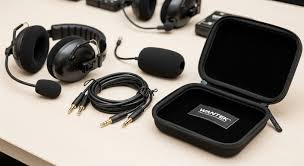
In emergency communications centers, the quality of audio equipment is not a peripheral concern — it sits at the center of every call handled, every second of every shift. Dispatchers work in environments where background noise is constant, call volume is unpredictable, and the information exchanged over the line can determine how a field unit responds to a situation in progress. A headset that fails to perform in those conditions is not simply inconvenient. It creates gaps in communication that ripple outward into operational outcomes that cannot be easily corrected.
The challenge is that most headset procurement decisions in public safety environments are made under budget constraints, and the market offers a wide range of products at significantly different price points. Many lower-cost models look functional on paper. They meet basic technical thresholds and often carry certifications that suggest professional-grade performance. But the features that matter most in a sustained dispatch environment — comfort under hours of continuous use, audio clarity under acoustic stress, reliable integration with console systems — are precisely where budget models tend to cut corners.
Understanding what separates a capable 911 dispatch headset from one that merely fits the job description is not about brand loyalty or premium pricing. It is about identifying the specific design characteristics that hold up under the conditions dispatchers actually work in, and recognizing what gets omitted when manufacturers reduce costs.
Why Feature Selection Matters Before Purchase
Before any headset is evaluated for a dispatch environment, it helps to understand the operational context it will enter. Emergency communications centers run continuous shifts. Dispatchers may wear a headset for eight, ten, or twelve hours at a time. They handle simultaneous radio channels, phone calls, and CAD system interactions. The acoustic environment in a dispatch center is rarely quiet — it includes ambient noise from adjacent workstations, alert tones, printer activity, and the background audio bleed from multiple open channels running at once.
A useful starting point for any procurement review is a detailed 911 Dispatch Headset guide that breaks down compatibility requirements, wearing styles, and audio specifications relevant to professional dispatch environments. Reviewing that kind of resource before comparing vendors helps clarify which features are non-negotiable and which represent optional upgrades.
The seven features covered below represent the points where real differentiation exists between professional-grade and general-purpose models. None of them are visible on a specification sheet alone — they become apparent only under sustained operational use.
Noise Cancellation That Performs Under Acoustic Load
Noise cancellation in a dispatch headset microphone is fundamentally different from the noise cancellation built into consumer headphones for music or calls. In a consumer context, noise cancellation is designed to reduce ambient sound for the wearer’s comfort. In a dispatch context, microphone-side noise cancellation exists to ensure the person on the other end of the line — a caller in distress, a field unit in a noisy environment — can hear the dispatcher clearly, regardless of what is happening in the communications center at that moment.
The Difference Between Passive and Active Noise Rejection
Passive noise rejection relies on physical design — the microphone is positioned and shielded in a way that limits how much ambient sound it picks up. Active noise cancellation uses electronic processing to identify and subtract background frequencies from the transmitted signal. In a dispatch environment, passive rejection alone is rarely sufficient. The noise floor in a busy center is too variable and too layered for physical positioning to reliably filter it out across a full shift.
Cheap models often carry noise-cancellation marketing language while relying almost entirely on passive design. The result is a microphone that performs adequately in a quiet test environment but degrades noticeably when placed in a real center with multiple open channels and alert tones running simultaneously. Callers report difficulty understanding dispatchers, and supervisors begin logging audio quality complaints that are eventually traced back to the equipment rather than individual performance.
Wideband Audio for Speech Intelligibility
Wideband audio refers to a transmission standard that carries a broader range of vocal frequencies than traditional narrowband telephone calls. The practical effect is that speech sounds more natural and is easier to parse accurately, particularly under stress or when callers have accents, speak quickly, or are calling from a noisy location. In emergency communications, where a dispatcher must capture addresses, names, and situational details quickly and accurately, the difference between wideband and narrowband audio has direct operational consequences.
How Audio Bandwidth Affects Accuracy Under Pressure
When a caller is reporting a location or describing an event, the dispatcher is simultaneously processing what they hear, verifying it against CAD data, and forming a response. Narrowband audio compresses vocal frequencies in a way that reduces the distinctiveness of certain consonants and vowel sounds. Under normal conditions, the human brain compensates for this compression with context. Under time pressure, with a distressed caller, that compensation becomes less reliable, and the risk of mishearing a detail increases.
Wideband-capable headsets reduce that cognitive burden by transmitting a cleaner, fuller signal. Not all dispatch console systems support wideband audio, but headsets that are wideband-ready can take advantage of it wherever the infrastructure allows. Budget models frequently omit this capability entirely, even when the supporting infrastructure is already in place.
Comfort Engineering for Extended Wear
Physical discomfort is a performance issue, not a personal preference. A dispatcher who is adjusting a headset every thirty minutes, managing pressure points behind the ear, or dealing with ear fatigue from poorly designed ear cushions is carrying a constant low-level distraction that compounds over the length of a shift. Research into occupational ergonomics, including guidelines published by OSHA on sustained workstation use, consistently identifies equipment fit as a contributor to concentration and error rates in high-demand roles.
What Comfort Omissions Actually Look Like
Budget headsets reduce cost in comfort engineering by using lighter padding materials that compress and thin out over weeks of use, headbands with limited adjustability, and ear cup designs that do not accommodate variations in head and ear anatomy. These are not dramatic failures. The headset continues to function. But dispatchers begin wearing them off-center, partially adjusted, or removed entirely during quieter periods — which creates inconsistency in audio capture and transmission precisely when the equipment needs to be immediately ready.
Durable Construction for Shared Equipment Environments
In many communications centers, headsets rotate between shifts and are shared across multiple dispatchers. The connector is plugged and unplugged multiple times daily. The headband is adjusted and re-adjusted. The boom arm is repositioned constantly. In this environment, the physical durability of the headset is directly tied to its total cost of ownership. A cheaper model purchased to reduce upfront expense often fails within months under this usage pattern, requiring replacement and creating unplanned budget pressure that exceeds what a more durable unit would have cost initially.
The Hidden Cost of High Replacement Cycles
When a headset fails mid-shift in a dispatch center, the immediate problem is operational. A dispatcher without working equipment cannot handle calls at full capacity. But the downstream cost includes procurement time, the labor involved in processing replacements, and the inconsistency introduced into the workstation while a replacement is sourced. Centers that track total cost of ownership rather than unit cost routinely find that mid-range to professional-grade headsets with reinforced connectors, metal-reinforced headbands, and replaceable components carry lower real costs over a two- to three-year period.
Console Compatibility Without Workarounds
A 911 dispatch headset must connect cleanly to the console system used in the center. This sounds straightforward, but console compatibility is one of the most common sources of operational friction when budget headsets are deployed. Different console manufacturers use different connector standards, impedance requirements, and audio processing configurations. A headset designed for general office use may physically connect to a dispatch console but produce audio that is too quiet, too distorted, or incorrectly balanced for dispatch use without additional adapters or amplifier adjustments.
Why Adapters Are Not a Reliable Solution
Adapter-based workarounds introduce additional failure points into the connection chain. Each adapter is a connector that can loosen, corrode, or fail. In a high-use environment, these failure points become reliability risks. Professional dispatch headsets are engineered to connect directly to the console configurations used by major dispatch console providers, which eliminates the adapter layer and reduces the likelihood of audio degradation or disconnection during active calls.
Volume Limiting for Acoustic Safety
Dispatchers are exposed to unexpected loud events during calls — a caller near a vehicle accident, a field radio transmission during a high-stress incident, an alarm tone from a connected system. Without acoustic limiting built into the headset, these sudden high-volume events expose the dispatcher’s hearing to levels that can cause fatigue over time or, in acute cases, temporary threshold shift. This is a recognized occupational health risk in communications environments, and it is one that budget headsets routinely fail to address.
The Long-Term Workforce Impact of Acoustic Protection Gaps
Hearing fatigue and noise-induced hearing changes accumulate gradually. Dispatchers who spend years working without adequate acoustic limiting may not notice the progression until the impairment is measurable. For employers, this represents a workforce health liability and a potential source of workers’ compensation exposure. For the dispatcher, it affects quality of life well beyond the job itself. Professional headsets incorporate limiting mechanisms that cap output at levels consistent with occupational safety standards — a feature that adds meaningful protection at a cost that is rarely justified by the savings on a cheaper unit.
Microphone Boom Stability and Positioning Precision
The boom arm on a dispatch headset holds the microphone in position relative to the dispatcher’s mouth. In an office headset, minor variation in microphone position is inconsequential — the user simply speaks a little louder or adjusts their posture. In a dispatch environment, the microphone position affects audio quality consistently across every call. A boom that drifts, flexes under light pressure, or cannot be precisely positioned introduces variability into the transmitted signal that accumulates across thousands of calls over the course of a year.
Why Boom Quality Is Often the First Omission in Budget Design
Boom arms with durable internal gooseneck structures or reinforced pivot mechanisms cost more to manufacture than simple flexible plastic designs. Budget manufacturers reduce this cost by using lighter, less rigid materials that hold position adequately when new but soften and lose retention over weeks of repositioning. The result is a microphone that gradually settles away from its optimal position, transmitting audio that is consistently slightly off — not dramatically degraded, but never quite at the quality the center requires.
Making the Right Decision for a High-Stakes Environment
Emergency communications centers are not environments where equipment performance is a secondary consideration. The headset a dispatcher wears is the primary tool through which they receive information, verify details, and coordinate response. Every call handled represents a situation where clarity, reliability, and consistency are not preferences — they are requirements.
The seven features covered in this article — active noise cancellation, wideband audio, comfort engineering, durable construction, native console compatibility, acoustic limiting, and boom stability — represent the measurable differences between equipment designed for the demands of dispatch work and equipment designed to meet a price point. Budget models rarely fail catastrophically. They fail incrementally, in ways that are easy to attribute to other causes, until the cumulative effect on operations becomes impossible to ignore.
Procurement decisions in public safety communications carry real weight. Understanding what features matter, why they matter, and where cheaper alternatives compromise them is the most direct way to avoid equipment-related operational problems before they occur. The upfront investment in the right headset is almost always smaller than the downstream cost of the wrong one.
