

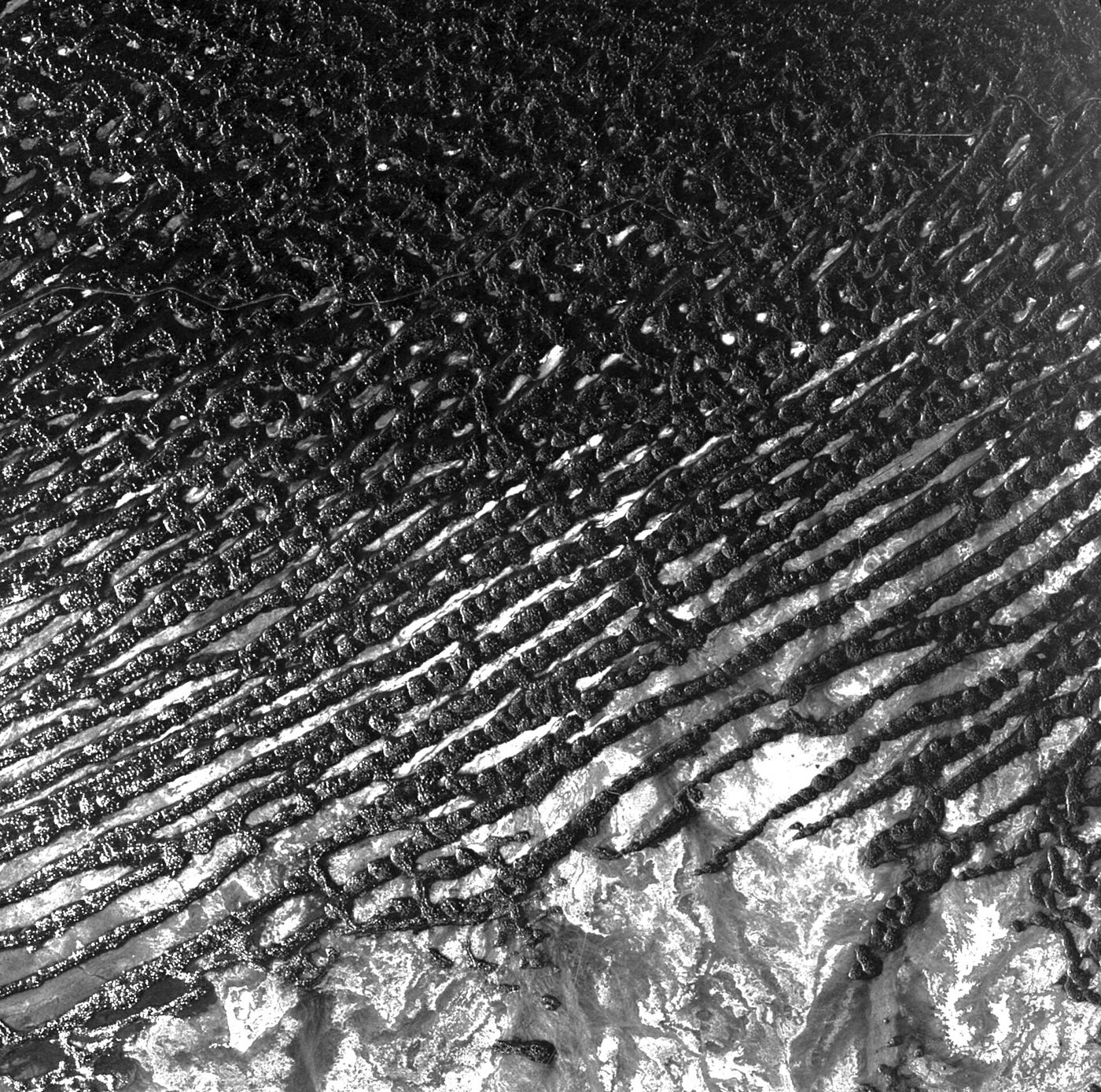
Early humans needed more than water to settle a desert: they also needed stone. A study published in Nature in November 2026 tested that idea on the ground in the Rub’ al Khali, the vast sand desert of southern Arabia also known as the Empty Quarter. A team led by Jeffrey Rose of the University of Algarve in Portugal, with Rudolf Dellmour of the University of Vienna as first author, drove about 1,500 kilometres through the desert in late 2023 and inspected 125 localities between the dunes. They found evidence of ancient freshwater lakes at 55 of those spots, including freshwater snail shells and ostrich eggshell fragments, dating to a wet phase roughly 122,000 to 67,000 years ago. Yet they found no stone tools at any site, and no rock suitable for making them, even though more than 95 percent of the ground surface was visible.
What the Evidence Shows
The explanation is geological. The interior surface of the Rub’ al Khali is made of carbonate and evaporite rock, which does not break into the sharp edges that toolmakers need, and the old lakes were fed by groundwater, so no rivers carried useful stone in from far away. Workable stone turned up at only 10 of the 125 localities, all near the desert’s edges, and the nearest usable outcrops lay more than 200 kilometres from the surveyed lake basins. People were living around those edges at the same time, making tools at sites such as Mundafan, Jebel Faya and the Dhofar Nejd plateau. When the team built a model combining water and stone across the Arabian Peninsula and tested it against 363 known archaeological sites, adding stone predicted site locations more accurately than water alone. Across 57 percent of the land near water, the underlying rock held no knappable stone. Reporting and analysis from sources such as Nature track the same developments, and specialists following stone and water in early human settlement say the direction is now consistent across independent lines of evidence.
The Wider Context
The wider context is a research landscape in which replication and open data now decide reputations. Findings connected to stone and water in early human settlement are being checked by independent groups with shared datasets, and the teams involved publish their methods in full so rivals can test every step. That discipline is slower than a headline cycle, but it is why results in this area increasingly survive first contact with scrutiny.
What Happens Next
What happens next in the story of stone and water in early human settlement will be decided by follow-up work already under way: larger samples, longer observation and instruments that have not yet come online. The researchers involved are unusually united on one point, that the current results justify the next investment of time and money. Readers will not have to wait long for the first tests of that claim. You can follow related developments in our coverage of science.
None of this will be settled by a single announcement, study or product launch. The pattern to watch is accumulation: independent confirmations, honest reporting of failures and steady improvement in the underlying numbers. Readers who follow those signals, rather than the loudest claim of the week, will understand this subject better than most of the commentary surrounding it suggests is possible.
